
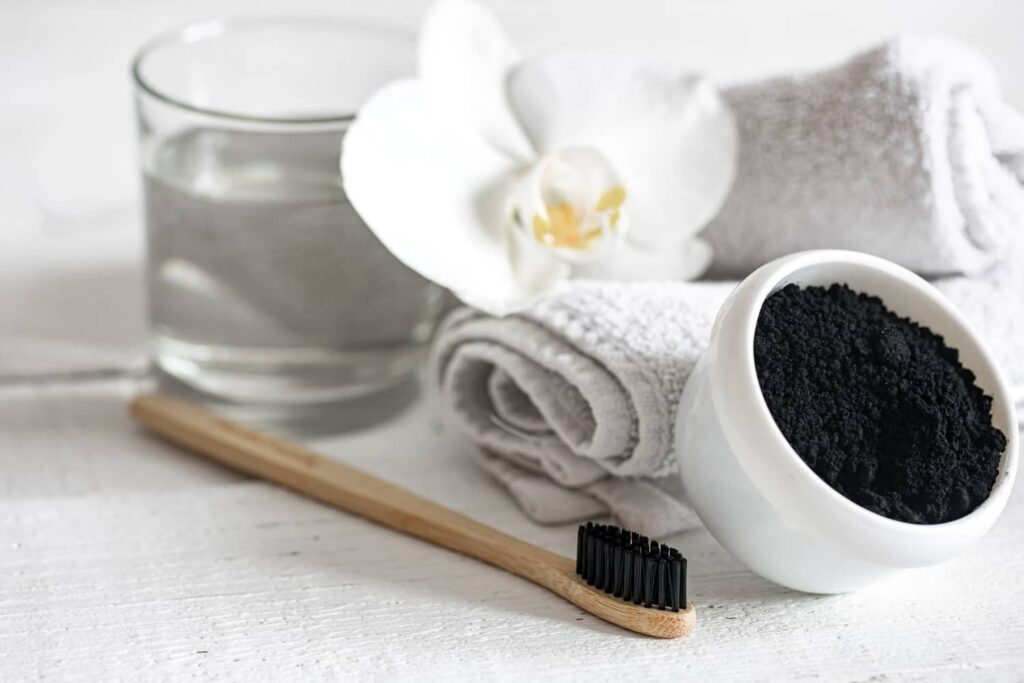
Charcoal toothpaste whitening products have become easy to find in local pharmacies and supermarkets, often marketed as a natural way to whiten teeth. The black paste promises to remove stains, freshen breath, and brighten your smile without harsh chemicals. But many people also ask a fair question: does charcoal toothpaste actually whiten teeth, or can it cause damage over time?
Understanding how it works and where the risks lie can help you decide whether it belongs in your daily routine.
How Charcoal Toothpaste Is Supposed to Work
Most charcoal toothpastes contain activated charcoal. This is a fine, porous form of carbon that can bind to substances on the surface of teeth. When you brush, the charcoal particles are meant to attract and absorb stains caused by coffee, tea, red wine, or smoking.
According to Radboudumc’s explanation of teeth whitening products, activated charcoal can remove surface stains, but it does not bleach the natural colour of teeth.
In theory, this can make teeth look cleaner and slightly brighter. The key point is that this effect is limited to surface stains. Charcoal toothpaste does not change the natural colour of your teeth, and it does not bleach them in the way professional whitening treatments do.
Does It Really Whiten Teeth?
For some people, charcoal toothpaste can make teeth look a bit whiter at first. This is usually because it helps remove surface discolouration. If your teeth are stained from everyday habits, you might notice a short-term improvement.
As shown in Consumentenbond’s test of whitening toothpastes, these products usually do not make teeth whiter than regular toothpaste.
However, this whitening effect is often mild and temporary. Once surface stains are gone, charcoal toothpaste cannot make teeth any lighter. Deep stains or yellowing caused by ageing or internal factors will not respond to charcoal-based products.
The Abrasiveness Concern
The main concern dentists have with charcoal toothpaste is abrasiveness. Many charcoal toothpastes are rougher than standard toothpaste. Over time, this can wear down enamel, the protective outer layer of your teeth.
Enamel does not grow back. When it becomes thinner, teeth may look more yellow because the underlying dentin shows through. Worn enamel can also lead to increased sensitivity and a higher risk of cavities.
Some charcoal toothpastes do not clearly list their abrasivity levels, which makes it difficult for patients to know how safe they are for daily use.
Effects on Gums and Oral Health
Charcoal particles can sometimes irritate the gums, especially if brushing is too aggressive. In some cases, fine charcoal residue can collect along the gumline or between teeth if it is not thoroughly rinsed away.
Another important point is fluoride. Not all charcoal toothpastes contain fluoride, which is essential for protecting teeth against decay. Regularly using a non-fluoridated toothpaste can increase your risk of cavities, especially if you already have enamel wear or gum issues.
Is Charcoal Toothpaste Safe to Use?
Occasional use of charcoal toothpaste is unlikely to cause serious harm for most people with healthy teeth and gums. Problems usually arise with frequent or long-term use, particularly when combined with hard brushing.
If you are considering charcoal toothpaste, it is best to use it sparingly and not as your main toothpaste. Alternating with a gentle, fluoride-containing toothpaste can help reduce potential risks.
A Dentist’s Perspective
From a clinical point of view, charcoal toothpaste is not the safest or most effective way to whiten teeth. While it may remove some surface stains, it does not offer controlled or predictable results. Professional advice and proper oral care routines remain the safest way to protect your teeth and maintain a healthy smile.
If you are unsure whether charcoal toothpaste is suitable for you, or if you already experience sensitivity, it is worth discussing your options with a dental professional. Good daily habits, regular check-ups, and informed product choices all play a role in long-term dental health.
For practical tips on caring for your teeth every day, you can also read more about how to maintain oral health and keep your smile strong and comfortable over the years.